Source RF Surface Vacuum Sealing Flange for Labs, Industry, and Vacuum Systems
Compare 30 RF surface vacuum sealing flange options from verified Chinese manufacturers. These flanges feature stainless steel construction, various connection types, and custom sizes to meet diverse vacuum system requirements.
Key considerations
Products List


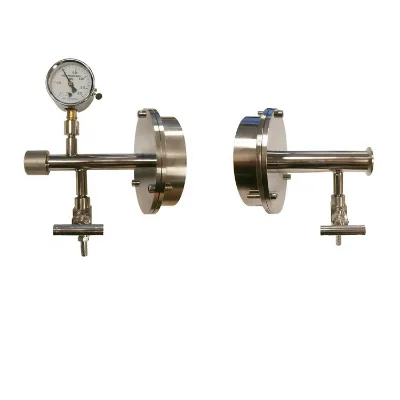


Comprehensive Sourcing Guide
Strategic Sourcing Guide for RF Surface Vacuum Sealing Flanges
Understanding Technical Specifications and Surface Requirements
The procurement of RF surface vacuum sealing flanges requires a precise understanding of the interplay between sealing mechanics, material integrity, and dimensional standards. The core keyword "RF surface vacuum sealing flange" points to a specific configuration where the Raised Face (RF) serves as the primary sealing interface. In this context, the RF surface is designed to concentrate gasket pressure onto a smaller area, ensuring a tight seal under vacuum conditions where even microscopic leaks can compromise system integrity. The supplied data confirms that RF sealing faces are a standard offering, alongside other options like Flat Face (FF) and Ring Joint (RJ), indicating that buyers must explicitly specify the RF requirement during the inquiry phase to avoid receiving incompatible components.
Material selection is equally critical for vacuum applications. The available product facts highlight Stainless Steel, specifically SS316L, as a highly configurable material option. SS316L is often preferred in vacuum environments due to its superior corrosion resistance and low carbon content, which minimizes sensitization during welding processes. The data indicates that SS316L can be ordered, suggesting that while standard carbon steel or other stainless grades may be available, the specific vacuum-grade material requires a deliberate selection. Furthermore, the manufacturing method is identified as "Forging," a process that generally enhances the grain structure and mechanical strength of the flange compared to casting, making it suitable for high-integrity vacuum systems.
The structural variety is extensive, ranging from standard welding flanges to specialized Quick Release and Standard Vacuum Flanges. The product models listed include specific series such as CF-D, KF16-KF250, and HIQ-FLS, which correspond to different industry-standard vacuum flange types. The CF series typically aligns with ISO standards for vacuum fittings, while the KF series represents a specific quick-release clamp system widely used in scientific and industrial vacuum chambers. Buyers must verify that the model number corresponds to the required vacuum standard, as the dimensions and clamping mechanisms differ significantly between a standard welding flange and a KF-type flange. The connection types observed include both Flanged and Welding options, necessitating a clear definition of the installation method required for the specific pipeline or chamber assembly.
Compliance, Standards, and Certification Verification
Navigating the compliance landscape for vacuum flanges involves verifying adherence to multiple international standards, as the supply chain for these components is global. The provided facts list a diverse array of standards including GB (Guobiao), GOST, DIN, ANSI, and JIS. This indicates that suppliers are capable of producing to various regional and international specifications, but it also places the burden of verification on the buyer. A flange marked with a "GB" standard may not meet the dimensional tolerances required for a system designed to "ANSI" specifications, even if the material is identical. Therefore, the procurement strategy must begin with a strict definition of the governing standard for the project.
The data explicitly mentions "CF16-CF400" and "KF16-KF250" as product standards. These alphanumeric codes represent specific size ranges and design criteria. For instance, the "CF" designation often refers to a specific vacuum flange standard where the number indicates the nominal diameter or a specific series identifier. Similarly, "KF" denotes a quick-flange system with specific clamp dimensions. When sourcing, buyers must ensure that the supplier's "prod_standard" field matches the exact requirement of the system design. Relying on a generic "Customised" standard without cross-referencing the specific dimensional drawings can lead to integration failures.
Regarding certifications, the supplied text does not list specific third-party certifications like ISO 9001 or ASME stamps. Instead, it lists material standards and manufacturing processes. This absence means that buyers cannot assume a supplier holds specific quality certifications based solely on the product listing. The procurement process must include a direct request for quality management system certificates and material test reports (MTRs). The "Surface Treatment" is noted as "Without Treatment" in some entries, which is a critical observation. For vacuum applications, surface finish is paramount; a lack of treatment might imply a raw forged surface, which could be insufficient for high-vacuum requirements where surface roughness affects outgassing rates. Buyers should verify if a specific surface finish, such as polishing or electropolishing, is available as an additional service, even if the base listing suggests "Without Treatment."
Cost Drivers and Pricing Dynamics
The pricing structure for RF surface vacuum sealing flanges is influenced by a complex matrix of factors, including material grade, manufacturing complexity, and order volume. The observed price range in the market data spans from $0.72 to $20,000. This extreme variance is not indicative of a single product type but rather reflects the spectrum from small, standard KF fittings to large, custom-engineered welding flanges for high-pressure industrial applications. The lower end of the range likely corresponds to smaller, off-the-shelf components like KF16 or KF25 fittings, while the upper end represents large-diameter, high-pressure class flanges (e.g., DN4000) or those made from exotic alloys.
Material costs are a primary driver. The availability of SS316L as an ordered option suggests that switching from a standard carbon steel or 304 stainless steel to 316L will incur a premium. This is due to the higher cost of molybdenum and the specific processing requirements for low-carbon stainless steel. Additionally, the "Forging" manufacturing method is generally more expensive than casting due to the energy and equipment costs involved, but it offers superior mechanical properties. Buyers should weigh the cost implications of forging against the performance requirements of their vacuum system.
Order volume plays a significant role in unit pricing. The Minimum Order Quantity (MOQ) ranges from 1 to 100 units. This flexibility allows for small-batch prototyping or emergency replacements, but it often comes with a higher per-unit cost compared to bulk orders. The "Supply Ability" of 3100 pieces per month for vacuum sealing flanges indicates that while suppliers can handle moderate volumes, extremely large orders may require lead time planning. The "Selling Units" are listed as "Single item," which supports the ability to purchase individual components, but buyers should be aware that this may not be the most cost-effective strategy for large-scale production runs.
Typical Applications and Performance Context
RF surface vacuum sealing flanges are integral to systems requiring high integrity and leak-tight performance. The specific mention of "vacuum sealing flange" in the supply data points to applications in semiconductor manufacturing, particle accelerators, vacuum coating systems, and scientific research equipment. In these environments, the RF surface ensures that the gasket is compressed uniformly, preventing leaks that could introduce contaminants or compromise the vacuum level. The "Integral Flange" type mentioned in the data is particularly relevant for high-pressure or high-temperature vacuum applications where the flange and pipe are manufactured as a single unit to eliminate potential leak paths at the weld joint.
The size range of 50mm and the model numbers extending up to CF400 or DN4000 suggest versatility across scales. Small flanges like the KF25 are common in laboratory vacuum lines and analytical instruments, while larger flanges are used in industrial vacuum furnaces and large-scale deposition chambers. The "Quick Release + Standard Vacuum Flange" option highlights applications where frequent disassembly is necessary, such as in process chambers that require regular maintenance or substrate changes. The ability to order specific hole patterns ("Hole/Screw Can Be Ordered") further supports customization for unique mounting requirements in specialized equipment.
Supplier Evaluation and Geographic Considerations
When evaluating potential suppliers, geographic origin is a significant factor in logistics and communication. The data indicates origins in Wenzhou, Zhejiang, China, and Henan, China. Wenzhou is a well-known hub for valve and flange manufacturing, suggesting a mature supply chain with experienced manufacturers. Henan, while less specialized in this specific niche, may offer competitive pricing due to lower labor costs. The "Port of dispatch" includes Zhengzhou, Qingdao, and others, which are major logistics hubs. Buyers should consider the proximity of these ports to their own facilities to optimize shipping costs and lead times.
Supplier reliability can be assessed through their "Supply Ability" and "Delivery Date" commitments. The data cites a delivery window of "Within 30 Days," which is a reasonable timeframe for standard orders. However, for custom models or large quantities, this timeline may extend. The "Packaging Details" vary from "Plastic paper inside, polyfoam filled, wooden box outside" to "Strong Plywood Case/Inter Carton." For vacuum components, which are sensitive to corrosion and physical damage, the packaging must be robust enough to prevent surface damage during transit. Buyers should explicitly confirm that the packaging includes moisture barriers and protective padding suitable for stainless steel components.
Quality Control and Inspection Protocols
Quality control for RF surface vacuum sealing flanges must be rigorous, given the critical nature of vacuum integrity. The "Surface Treatment" being listed as "Without Treatment" in some cases is a red flag for high-vacuum applications. Buyers must verify the actual surface roughness and finish of the RF face. Ideally, the RF surface should be machined to a specific roughness average (Ra) to ensure proper gasket seating. The absence of a specified surface treatment in the general listing implies that this is a variable that must be negotiated.
Inspection protocols should include dimensional verification against the specified standard (e.g., GB, DIN, ANSI). The "prod_standard" field lists specific ranges like DN15-DN4000, and buyers must ensure that the delivered flanges fall within the tolerance limits of the chosen standard. Material verification is also essential; even if SS316L is ordered, the supplier must provide a Mill Test Certificate (MTC) to confirm the chemical composition and mechanical properties. The "Forging" process should be verified to ensure there are no internal defects, which can be checked through non-destructive testing (NDT) methods like ultrasonic testing if the application demands it.
Long-Term Procurement and Lifecycle Management
Sourcing RF surface vacuum sealing flanges is not a one-time transaction but part of a long-term lifecycle management strategy. The availability of "Customised" models and the ability to order specific materials like SS316L suggest that suppliers can adapt to changing project needs. However, buyers should establish a long-term relationship with a supplier who can guarantee consistent quality over time. The "Brand name" CYKY appears in the data, indicating that some suppliers operate under their own brand, which can be a factor in traceability and support.
Maintenance and replacement planning are crucial. Vacuum flanges are subject to wear, particularly the RF surface and the gasket seating area. Buyers should consider the availability of spare parts and the lead time for reordering. The "Delivery Date" of within 30 days is a baseline, but for critical spare parts, a shorter lead time or a local stock arrangement might be necessary. Additionally, the "Other" field mentions "SS316L Can Be Ordered," which implies that material customization is a standard capability. Buyers should leverage this to ensure that future replacements match the original specifications exactly, avoiding compatibility issues that can arise from material variations.
In conclusion, sourcing RF surface vacuum sealing flanges requires a meticulous approach that balances technical specifications, compliance, cost, and supplier reliability. By focusing on the specific requirements of the RF surface, verifying material grades like SS316L, and ensuring adherence to the correct international standards, buyers can secure components that meet the rigorous demands of vacuum applications. The flexibility in manufacturing, packaging, and customization offered by the market provides ample opportunity for tailored solutions, provided that the buyer maintains a disciplined verification process throughout the procurement lifecycle.
FAQs
Can I order SS316L material for RF vacuum flanges?
Yes, SS316L can be ordered as a specific material option for these flanges. This grade is preferred for vacuum applications due to its corrosion resistance, though standard stainless steel may also be available depending on the supplier.
What standards are available for welding flange models?
Available standards include GB, GOST, DIN, ANSI, and JIS. Specific product models like CF16-CF400 and KF16-KF250 correspond to these standards, requiring buyers to verify the exact dimensional requirements before ordering.
How is the sealing surface treated for vacuum sealing?
Some listings indicate the surface treatment is without treatment, which may require verification for high-vacuum needs. Buyers should confirm if the Raised Face (RF) surface is machined to specific roughness standards to ensure a tight seal.
Which manufacturing process is used for these flanges?
The manufacturing way listed is forging, which enhances grain structure and mechanical strength compared to casting. This process is suitable for high-integrity vacuum systems requiring superior durability and leak-tight performance.
What is the typical delivery time for these flanges?
The delivery date is typically within 30 days for standard orders. This timeline may vary for custom models or large quantities, so buyers should confirm lead times based on their specific order volume and customization needs.
Can I request custom hole patterns for the flanges?
Yes, hole and screw patterns can be ordered as a customization option. This allows for specific mounting requirements in specialized equipment, ensuring the flange integrates correctly with the vacuum chamber or pipeline assembly.
What packaging is used for shipping these flanges?
Packaging details include strong plywood cases, inter cartons, or wooden boxes with internal polyfoam. This robust packaging protects the stainless steel components from corrosion and physical damage during transit to global destinations.